

Table of Contents
- The Real Cost of Manufacturing Faith-Based Apparel
- Why Faith-Based Graphic Tees for Women Command Higher Prices
- Ethical Manufacturing in Apparel: The Hidden Price Tag
- Boutique vs. Mass Market Clothing Quality
- Design, Creative Labor, and Brand Identity
- Small-Batch Production and Supply Chain Costs
- Stewardship Over Consumerism: The Ministry vs. Business Tension
Last Updated: August 27, 2026
The Real Cost of Manufacturing Faith-Based Apparel
When you pick up a faith-based graphic tee, you're investing in a product shaped by dozens of decisions, each adding cost at different points in the supply chain. Understanding why christian apparel costs more starts with understanding what goes into making it.

The journey from concept to your closet involves material sourcing, ethical labor practices, specialized printing techniques, and overhead expenses that mass-market retailers simply don't absorb. A $35 Christian graphic tee from Refined By Grace Boutique reflects the actual expenses of creating something that lasts, feels good, and carries meaning.
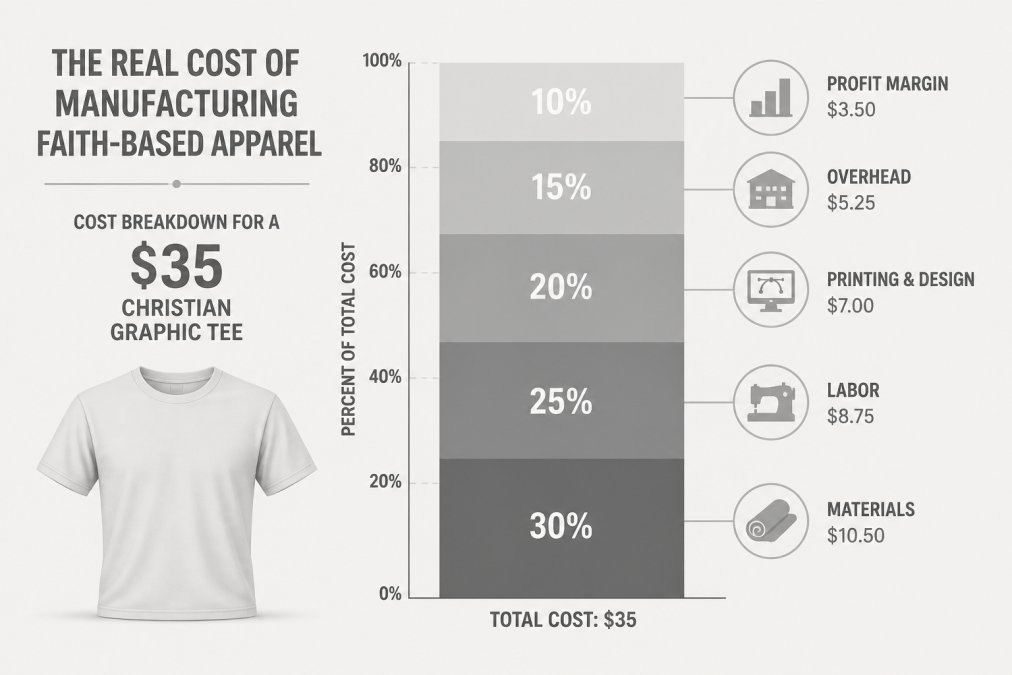
Manufacturing starts with material selection. Boutique apparel typically uses higher-quality cotton blends, often 100% organic or ring-spun cotton, that cost more upfront but deliver durability and comfort that justify the price. Labor represents another significant portion of the cost structure. Ethical manufacturing means paying workers fair wages, providing safe working conditions, and maintaining reasonable production schedules, fundamentally different from fast fashion's race-to-the-bottom pricing.
Printing and design labor adds another layer. Screen printing, direct-to-garment printing, and other specialized techniques require skilled technicians and proper equipment. A hand-drawn design demands creative labor that can't be rushed or automated. Overhead expenses, facility costs, quality assurance, customer service, and packaging get distributed across inventory. Smaller production runs mean these costs per unit stay higher than mass-market brands producing 10,000 units at once.
Why Faith-Based Graphic Tees for Women Command Higher Prices
The market for faith-based graphic tees for women is fundamentally different from the broader apparel market. It's about creating pieces that women actually want to wear, that fit well, and that express something meaningful about their identity and values.
Faith-based apparel carries expectations that mass-market clothing doesn't. Women seeking these pieces want designs that feel intentional, colors that feel vibrant, and messaging that resonates spiritually without feeling preachy. That specificity requires design expertise and market knowledge that costs more to develop.
The audience for faith-based graphic tees for women is also more discerning about quality. These aren't impulse purchases; they're deliberate choices reflecting personal values. A woman buying a tee with John 1:16 printed on it is making a statement about her faith, her style, and what matters to her.
Production volume also affects pricing. A boutique brand produces smaller batches of faith-specific designs, which means higher per-unit costs but fresher, more thoughtful collections. Distribution channels matter too. Faith-based apparel typically flows through boutiques, faith communities, and direct-to-consumer channels, each with its own cost structure. Boutiques maintain higher overhead than warehouse retailers, which translates to higher prices at the point of sale.
Ethical Manufacturing in Apparel: The Hidden Price Tag
Ethical manufacturing in apparel is a commitment that fundamentally changes how a business operates and what it costs to do so. When a brand prioritizes fair wages, safe working conditions, and transparent supply chains, those decisions ripple through every cost center.
The apparel industry has a documented history of labor exploitation. Fast fashion's low prices depend on paying workers pennies per hour in unsafe conditions. Ethical manufacturing rejects that model entirely. It means partnering with factories that meet strict standards, conducting regular audits, and sometimes paying premium prices to work with suppliers who share those values.
Fair labor practices mean higher hourly wages for production workers, benefits packages, reasonable work hours, and safe equipment. Supply chain transparency adds cost too. Ethical brands track their materials from source to finished product. That level of documentation requires systems, staff, and verification.
Sustainable practices in manufacturing also contribute to higher prices. Using water-efficient dyeing processes, non-toxic inks, and waste-reduction strategies requires investment in better equipment and training. Many Christian women recognize that how a product is made matters spiritually. Supporting brands that treat workers fairly and operate sustainably aligns with values of stewardship and human dignity.
Boutique vs. Mass Market Clothing Quality
The difference between boutique apparel and mass-market clothing quality extends far beyond the price tag. It's visible in fabric weight, durability, printing longevity, and how the piece feels against your skin after dozens of washes.
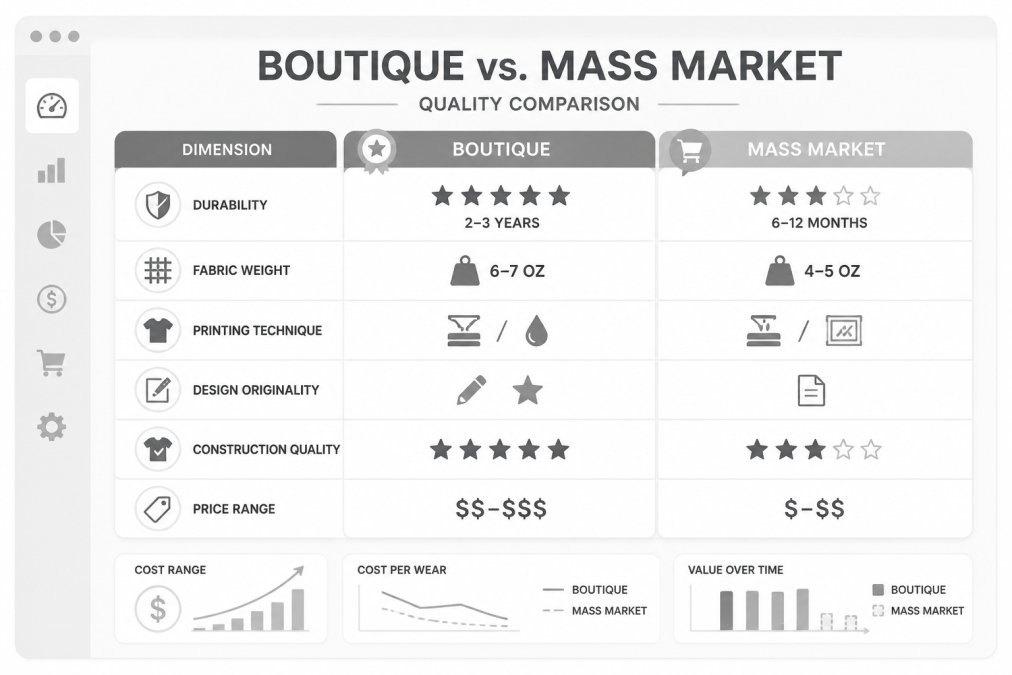
Boutique apparel uses heavier fabric, typically 6 to 7 ounces of ring-spun cotton versus the 4 to 5 ounces found in mass-market basics (astm.org). That weight difference means the garment drapes better, holds its shape through multiple washes, and feels more substantial.
Printing quality separates boutique from mass-market dramatically. A boutique brand invests in screen printing or direct-to-garment technology that bonds ink directly to the fabric. Mass-market retailers often use heat transfer printing, where a design is essentially glued to the surface. After 10 washes, heat transfer designs crack and peel (peer-reviewed research). Screen-printed designs last for years because the ink becomes part of the fabric itself.
Color retention matters too. Boutique apparel uses higher-quality dyes and proper curing processes that lock color into the fabric. Mass-market apparel often uses cheaper dyes that fade noticeably after just a few washes.
Fit and construction also reflect the quality gap. Boutique brands invest in pattern grading, creating properly proportioned sizes that account for how fabric drapes on different body types. Seam quality is another tell. Boutique apparel uses reinforced seams, proper thread tension, and quality stitching that doesn't unravel. The durability difference means a boutique piece worn 2-3 times per week lasts 2-3 years, while a mass-market equivalent might last 6-12 months (the FTC).
Design, Creative Labor, and Brand Identity
Every faith-based graphic tee represents hours of creative work before a single shirt ever gets produced. Creating an original design for faith-based apparel requires understanding theology, aesthetics, and the target audience's values simultaneously.
That creative labor costs money. A professional designer working on original apparel designs typically charges rates that reflect years of training and expertise. A mass-market brand might use stock graphics that cost a few dollars to license. A boutique brand pays for original work because original design builds brand identity and customer loyalty.
Brand identity itself carries cost. Refined By Grace Boutique isn't just selling shirts; it's building a recognizable visual language that women recognize and trust. That consistency requires investment in design systems, color palettes, typography, and messaging frameworks.
The creative process includes iteration. A design might go through 5-10 revisions before it reaches production. A designer works with stakeholders to refine messaging, adjust visual elements, and ensure the final design delivers the intended impact. Custom apparel design also requires understanding production constraints and technical knowledge that comes from experience.
Small-Batch Production and Supply Chain Costs
Small-batch production is the backbone of boutique apparel and one of the primary reasons why christian apparel costs more than mass-market alternatives. When a brand produces 500 units of a design instead of 50,000, the economics work completely differently.
Manufacturing facilities offer volume discounts. A factory producing 50,000 units of one design can spread setup costs across a massive quantity. A factory producing 500 units of a custom faith-based design can't achieve those economies of scale. The setup cost stays the same, but it gets divided among far fewer units.
Supply chain complexity increases with small batches. Ordering smaller quantities of specialized materials, organic cotton, specific thread colors, and quality dyes means paying higher per-unit prices from suppliers. Inventory management becomes more complex and costly with small-batch production. A boutique brand produces multiple designs in smaller quantities, which means managing more SKUs and dealing with the risk that a particular design won't sell as expected.
Quality control becomes more intensive with diverse, smaller production runs. A factory producing 20 different faith-based designs in smaller batches needs to adjust settings, check quality, and manage changeovers more frequently. That labor costs more. Small-batch production also means fresher collections. Women buying faith-based apparel appreciate new designs regularly rather than the same pieces year-round.
Stewardship Over Consumerism: The Ministry vs. Business Tension
There's a fundamental tension in faith-based apparel that distinguishes it from secular fashion: the tension between operating as a sustainable business and living out values of stewardship, simplicity, and non-consumerism.
Christian theology emphasizes stewardship, the idea that we're caretakers of resources, not owners. Applied to apparel, stewardship means creating pieces that last, that serve a purpose beyond status or trend-chasing, and that don't contribute to the waste and exploitation embedded in fast fashion. A $35 tee designed to last 2-3 years of regular wear is more stewardly than a $12 tee that falls apart after a season.
But there's a tension: faith-based apparel exists in a capitalist marketplace. Brands need to generate revenue to stay in business, pay workers fairly, and fund operations. A brand can't serve its mission if it goes bankrupt, but it also can't claim to be faith-centered if it exploits workers or contributes to environmental degradation to maximize profits.
Refined By Grace Boutique navigates this tension by prioritizing quality, ethical practices, and meaningful design over volume and trend-chasing. The pricing reflects a rejection of fast fashion's values. A woman buying a Grace Upon Grace Long Sleeve Tee isn't buying into a trend; she's investing in a piece that will support her faith expression for years.

The higher cost also serves as a filter. It ensures that people buying faith-based apparel are doing so intentionally, not impulsively. That intentionality creates a community of women who genuinely value expressing their faith through their clothing.
Understanding why christian apparel costs more reveals a commitment to quality, ethics, and meaning that mass-market clothing simply doesn't offer. Every decision, from material selection to labor practices to design originality, reflects values that cost money but deliver lasting value. When you invest in faith-based apparel from Refined By Grace Boutique, you're supporting a business that prioritizes fair wages, quality craftsmanship, and designs that help you express your faith boldly. Shop now and discover the difference that intentional, values-aligned apparel makes in how you feel wearing it.
Frequently Asked Questions
Why does Christian apparel cost more than regular graphic tees from big retailers?
Christian apparel, especially from boutique makers, reflects higher costs across the entire supply chain. Ethical manufacturing practices, quality materials, hand-drawn or custom designs, and small-batch production all add to the price. Unlike mass-market retailers that produce thousands of identical pieces, faith-based brands often invest in meaningful design and fair labor practices, which directly increase costs.
How does ethical manufacturing in apparel affect pricing?
Ethical manufacturing in apparel means paying fair wages, maintaining safe working conditions, and ensuring transparency in the supply chain. These practices cost more than fast-fashion production, but they result in better quality garments and support workers fairly. When you buy ethically made faith-based graphic tees for women, you're paying for responsible business practices alongside the product itself.
Will a boutique Christian tee actually last longer than a mass-market option?
Yes. Boutique apparel uses higher-quality fabrics, better printing techniques like screen printing or direct-to-garment, and stricter quality assurance. Mass-market graphic tees often use thinner cotton and cheaper printing methods that crack or fade after a few washes. Boutique pieces are designed for durability and longevity, making them a better long-term investment despite the higher upfront cost.
What's included in the price of faith-based apparel beyond the shirt itself?
Beyond materials and labor, you're paying for custom design work, brand identity development, customer acquisition, shipping and logistics, and overhead costs for independent creators. For faith-based brands, there's also the investment in meaningful messaging and community connection. Small-batch production means each piece carries a higher share of these fixed costs compared to mass-produced items.
This article was written using GrandRanker
