

Table of Contents
- Understanding Your Graphic Tee's Print Type
- The Best Way to Wash Screen Printed Shirts
- Air Drying vs. Machine Drying Graphic Tees
- How to Prevent T-Shirt Print Cracking and Fading
- Storage Best Practices for Long-Term Print Longevity
- Repairing Damaged Prints and Extending Garment Life
- Eco-Friendly Care for Your Graphic Tees
- Maintaining Graphic Tee Quality Year-Round
Last Updated: August 23, 2026
Understanding Your Graphic Tee's Print Type
The first step in maintaining graphic tee quality is identifying your print type, as different methods require different care approaches. Screen printing pushes ink through mesh onto fabric, creating a durable raised layer. Direct-to-garment printing applies ink directly to fibers for a softer feel and finer details. Vinyl transfers use heat to bond vinyl to the shirt.
This matters because screen-printed designs withstand more aggressive washing than direct-to-garment prints, while vinyl transfers are sensitive to high heat.
The Best Way to Wash Screen Printed Shirts
Washing is where most damage occurs. The combination of water temperature, detergent type, fabric friction, and washing intensity either preserves or deteriorates your shirt.
Prepare Your Load: Separation and Temperature
Never wash graphic tees with heavy items like jeans or towels, fabric friction causes the print to crack and peel faster. Wash them together or with lightweight items like underwear and socks.
Separate dark-colored graphic tees from lighter colors for the first few washes to prevent color bleeding. Cold water is essential for maintaining graphic tee quality. Hot water breaks down ink adhesion and fabric fibers, causing the print to expand and contract, leading to cracking over time (peer-reviewed research). Set your machine to the coldest water available.
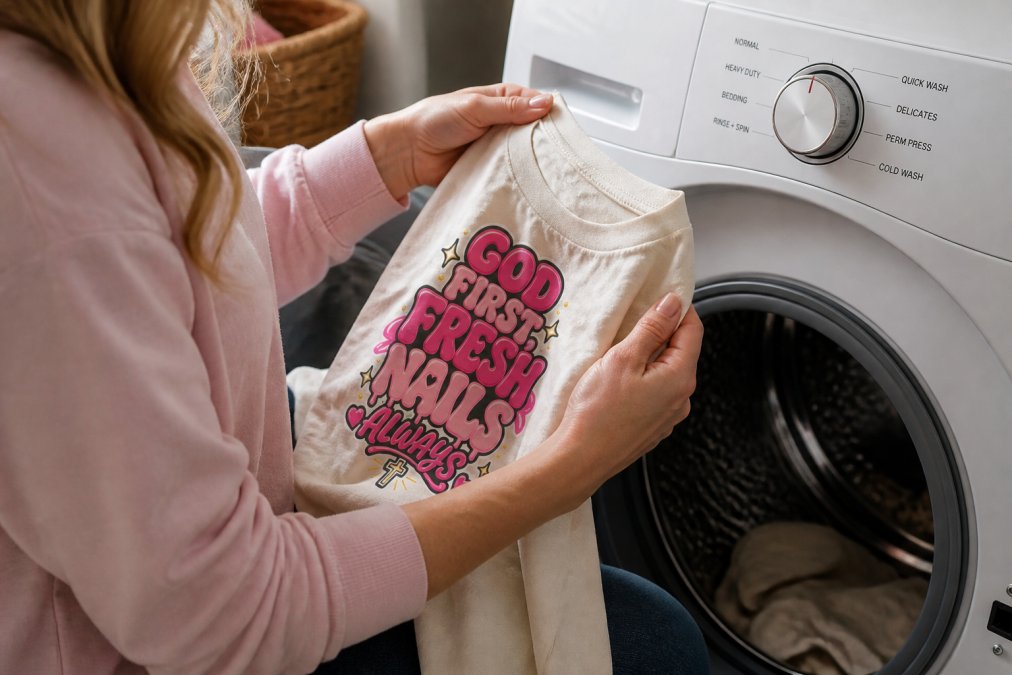
Washing Inside Out and Choosing Detergent
Turn your graphic tee inside out before washing to reduce direct friction between the print and the washing machine agitator. This simple step protects the printed side while the inside faces mechanical action.
Select mild detergent without bleach or harsh chemicals. Heavy-duty detergents contain surfactants that break down fabric fibers and strip ink from the print. Avoid fabric softener, which dulls colors and weakens the print's bond. Use a gentle wash cycle rather than standard or heavy-duty settings to reduce agitation and tumbling.
Air Drying vs. Machine Drying Graphic Tees
The drying method has as much impact on print longevity as washing. Machine drying generates heat that damages both print and fabric, while air drying preserves both.
Air drying is the gold standard. Hang your shirt on a clothesline or lay it flat on a clean, dry surface away from direct sunlight. This takes 4-8 hours but eliminates heat damage entirely (the NIH). If you must use a machine dryer, use the lowest heat setting or air-dry cycle for 15-20 minutes, then remove immediately.
Avoid ironing directly over the print. If necessary, use a pressing cloth between the iron and print, set heat to low, and iron only unprinted portions. Hanging your shirt while damp lets gravity eliminate most wrinkles.
How to Prevent T-Shirt Print Cracking and Fading
Print cracking and fading are the most common deterioration issues. Understanding their causes helps you prevent them.
Protecting Against Heat Damage and Fabric Friction
Heat is the primary culprit behind print cracking. Every exposure to high temperatures causes the print to expand and contract, eventually cracking and flaking away. Protect your shirt from direct sunlight during storage and drying, UV rays fade colors gradually.
Fabric friction accelerates both cracking and fading. Washing with heavy items, wearing the shirt under rough jackets, or storing it tightly packed weakens the print's bond. Treat graphic tees as delicate items and avoid layering them under coarse materials.
Shrinkage also damages prints. When fabric shrinks, the print doesn't shrink at the same rate, creating stress and cracking at edges. Cold water washing prevents most shrinkage, and air drying eliminates additional heat-induced shrinking.
Stain Removal Without Harming the Print
Stains happen, especially for professionals who wear graphic tees like the God First Fresh Nails Always T-Shirt during active workdays. Treat stains immediately by blotting gently with a clean cloth, don't rub, which pushes the stain deeper.

Apply mild detergent directly to the stain and let it sit 15-30 minutes. Rinse with cold water and check before washing. For protein-based stains like blood, use cold water only. For oil-based stains, apply dish soap, let it sit briefly, then rinse thoroughly.
Never apply stain remover directly to the print itself. Work around it, treating only the fabric beneath the design. Oxygen-based stain removers are gentler than chlorine bleach.
Storage Best Practices for Long-Term Print Longevity
Fold rather than hang your graphic tees to prevent stretching at shoulders and neckline. Hanging puts constant stress on fabric fibers and distorts the shirt's shape.
Store graphic tees in a cool, dry place away from direct sunlight. Heat and humidity accelerate fading and promote mildew growth. Avoid plastic storage containers, which trap moisture. Use acid-free tissue paper between folded shirts for long-term storage to prevent yellowing.
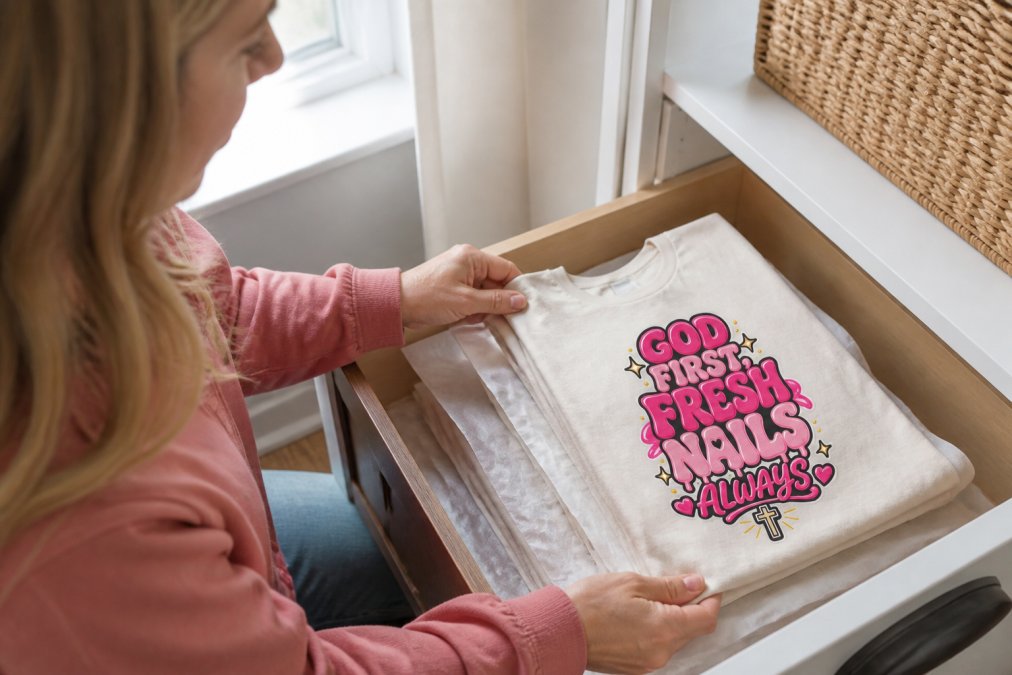
Rotate your collection regularly. Wearing shirts in rotation rather than repeatedly washing the same few extends each piece's lifespan and gives prints time to rest between wears. Keep graphic tees away from strong light sources, even indoor lighting fades prints over time.
Repairing Damaged Prints and Extending Garment Life
Minor cracking at edges can sometimes be sealed with fabric glue designed for textiles. Apply it sparingly to loose edges, let it dry completely, and test by gently pulling to ensure it's secure.
For larger areas of peeling or missing print, professional re-printing is an option. Some print shops can apply new designs over damaged areas or restore worn prints. If the print is beyond repair but fabric is good, consider removing the print entirely or using the shirt for casual activities.
Eco-Friendly Care for Your Graphic Tees
Wash less frequently when possible. Graphic tees don't need washing after every wear unless visibly soiled. Wearing them multiple times between washes extends lifespan and reduces water consumption.
Use cold water exclusively, which reduces energy required to heat water. Choose natural, biodegradable detergents over synthetic ones. Air dry instead of using the machine dryer to save significant energy while extending print life.
When a graphic tee reaches the end of its life, donate it to thrift stores or clothing donation centers. If too worn for donation, some textile recycling programs accept old clothing for processing into new materials.
Maintaining Graphic Tee Quality Year-Round
Create a simple laundry routine: turn inside out, wash in cold water on gentle cycle with mild detergent, air dry. This becomes automatic and requires no extra effort.
Inspect your graphic tees periodically for early signs of damage. Catching small cracks or peeling edges early prevents them from spreading. Rotate your collection so you're not wearing the same graphic tee repeatedly. If you have faith-inspired pieces like the Faith Graphic T-Shirt or the Chosen Long Sleeve T-Shirt, wearing them in rotation keeps each one looking fresh longer.


Store seasonal graphic tees properly when not wearing them. Fold carefully, use acid-free tissue for long-term storage, and keep in a cool, dry place. How to maintain graphic tee quality ultimately comes down to treating them with intention. These pieces often carry meaningful messages that matter to you, and the care you invest now pays dividends in longevity.
Graphic tees with meaningful faith-inspired designs deserve care matching their importance. Refined By Grace Boutique creates graphic tees designed to last, like our God First Fresh Nails Always T-Shirt and Faith collection. By following these maintenance practices, you'll keep your favorite pieces looking beautiful for years. Start with cold water and gentle cycles today, and watch how your graphic tees maintain their vibrant colors and crisp prints through countless wears.
Frequently Asked Questions
Q: What's the best way to wash graphic tees without damaging the print?
A: Turn your graphic tee inside out, use cold water, and select a gentle wash cycle with mild detergent. Avoid bleach and fabric softener, which can cause cracking and fading. Washing separately from heavier fabrics reduces friction damage to the print. Air dry whenever possible to prevent heat damage that machine drying can cause.
Q: How can I prevent my graphic tee print from cracking?
A: Heat is the primary culprit behind cracking. Always air dry your graphic tees instead of using a dryer's tumble dry setting. When washing, use cold water and avoid high heat. Store tees flat or folded loosely to minimize stress on the print. Limit ironing directly on the graphic; if needed, iron on the reverse side with a low heat setting.
Q: Should I air dry or machine dry my graphic tees?
A: Air drying is significantly better for print longevity. Machine drying's heat and tumble action accelerate cracking, peeling, and fading. Lay tees flat or hang them in a shaded area away from direct sunlight. Air drying takes longer but preserves the graphic and extends the garment's life by months or even years compared to regular dryer use.
Q: How long should a quality graphic tee last with proper care?
A: A well-made graphic tee maintained with cold water washing, gentle cycles, and air drying can last 3-5 years or longer. Following these care steps, especially avoiding heat, harsh detergents, and fabric friction, significantly extends print longevity and keeps the garment looking vibrant.
This article was written using GrandRanker
