
The Grace Journal Blog
Why Do Christian Tees Cost More? Honest Breakdown
September 05, 2026
Table of Contents
- The Real Cost Breakdown of a Christian Tee
- Boutique Quality vs Mass Market Clothing: What Your Money Buys
- Ethical Manufacturing in Christian Apparel: Fair Wages and Small Batches
- Artistic Labor and Custom Graphic Design Costs
- Faith Based Graphic Tees for Women: A Worthwhile Investment
- Sustainability vs. Fast Fashion: The True Price of Disposable Style
- A Stewardship Perspective: What Does the Bible Say About Value?
- Conclusion: Choosing Quality That Honors Your Values
- Frequently Asked Questions
Last Updated: September 6, 2026
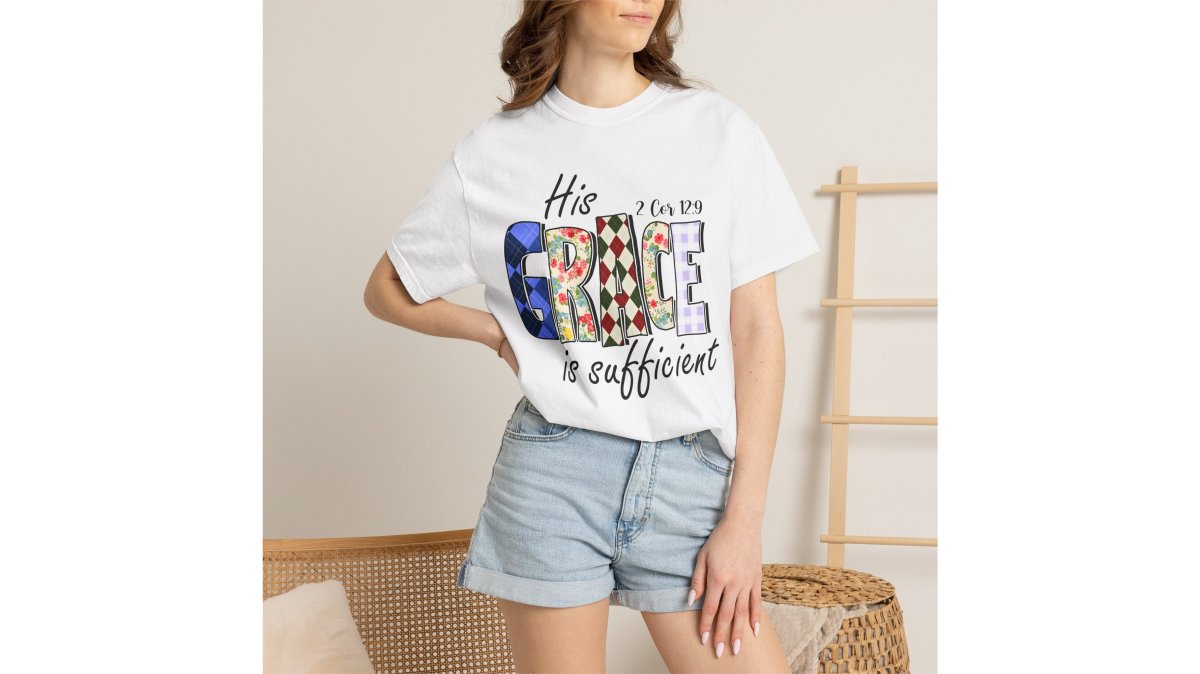
It is a fair question that lingers after you add a beautiful faith-based tee to your cart: why do christian tees cost more than the basic tops at big-box retailers? At Refined By Grace Boutique, we hear this often, and the answer reveals a story about ethics, artistry, and intentionality that mass-market clothing simply cannot tell. The higher price tag is not a markup on a message; it is a reflection of a completely different way of bringing a garment to your closet.
When you choose a boutique tee, you are investing in a product designed to last, created by people paid fairly for their skill, and made in small batches to reduce waste. Below, we will show you exactly how those costs add up and why this investment often proves wiser for your wallet and your witness.
The Real Cost Breakdown of a Christian Tee
To truly understand the price, we have to move past the sticker shock and look at the itemized receipt behind a single, premium, ethically made tee. The common assumption is that a $40 shirt carries a $30 profit margin. In reality, the margin is far thinner than most consumers realize.

Here is a transparent look at where that money goes, based on standard industry costs for a small-batch production run. This is not a quote from a specific brand, but a representative model of the costs any boutique faces.
1. The Blank Canvas (The Shirt Itself): $8 - $15
This is the single most important cost driver. A premium, heavyweight (6 oz. or more) cotton shirt from a wholesale supplier costs between $8 and $12 per unit when purchased in small quantities. This price reflects the use of long-staple cotton, which is more durable and resists pilling, and a manufacturing process that often includes pre-shrunk fabric and a more tailored fit.
2. The Art & Design: $2 - $5 per shirt
A custom design is not a clip-art file. It is the result of a graphic designer spending hours on typography, layout, and color theory. For a small brand, this is often a flat freelance fee of $100-$300 per design, amortized to $1-$3 per shirt on a run of 100. If the design is licensed from an artist, the royalty fee adds another $1-$2 per unit.
3. Printing & Ink: $4 - $8 per shirt
Screen printing is the standard for high-quality, long-lasting graphics. A reputable shop will charge a setup fee (around $50-$100 per color) to burn the screens, and then a per-print cost of $2-$4 per shirt for a single-color design. Water-based inks, which are softer and more eco-friendly than plastisol, cost more but bond with the fabric rather than sitting on top of it, which is why a high-quality print doesn't crack or peel after a few washes.
4. Labor & Ethical Manufacturing: $5 - $10 per shirt
This is the hidden cost that separates an ethical product from an exploitative one. If a brand is committed to paying a living wage in a domestic facility or a certified fair-trade overseas factory, the labor cost per garment is significantly higher. The difference between a $2 labor cost and a $7 labor cost is the difference between a worker who can support a family and one who cannot.
5. Shipping, Packaging, & Overhead: $5 - $8 per shirt
This covers the cost of shipping the blanks to the printer, the finished shirts to the brand's warehouse, and then to your door. It also includes the packaging, a poly mailer or a branded box, and the overhead costs of running a business: website hosting, payment processing fees (2.9% + $0.30 per transaction), marketing, and customer service.
6. Profit Margin: $3 - $5 per shirt
After all these costs are tallied, the remaining amount is the profit. For a small business, this margin is often reinvested into new designs, better materials, or donated to a cause.
When you add these figures together, a $35-$45 retail price is not a greedy markup. It is the minimum viable price for a product that is designed ethically, printed durably, and sold by a business that intends to stick around.
Boutique Quality vs Mass Market Clothing: What Your Money Buys
The most significant difference between a boutique tee and a mass-market option is the quality of the blank canvas itself. Fast fashion often relies on thin, flimsy fabrics that lose their shape after a few washes, while boutique brands choose heavyweight cotton that feels substantial and drapes beautifully.
This focus on quality extends to the printing process. Mass-market graphics are often applied with heat transfers that crack and peel, while smaller brands frequently use screen printing methods with water-based inks that bond with the fabric, resulting in a design that remains vibrant and intact for years.
Ethical Manufacturing in Christian Apparel: Fair Wages and Small Batches
A central reason for the higher cost lies in the commitment to ethical manufacturing in Christian apparel. Producing in small batches avoids the massive overproduction that plagues the apparel industry, reducing waste and ensuring that each piece is crafted with care.
This model also supports fair wages. Mass-market clothing is often produced in facilities where labor practices are questionable. By contrast, mission-driven brands partner with manufacturers who pay their workers fairly, and that cost is passed on to the consumer. When you buy a tee made in a small batch, you are casting a vote for supply chain transparency and social responsibility.
Artistic Labor and Custom Graphic Design Costs
Behind every meaningful Christian tee is an artist who translated a theological truth into visual form. Custom graphic design is a specialized skill that involves conceptualizing the message, hand-drawing the lettering, and refining the layout until it is both beautiful and legible.
A hand-drawn design that feels like a piece of art requires hours of creative work, revisions, and a keen eye for typography and color. When you purchase a tee with original artwork, you are paying for the creativity that makes the message resonate and the garment worth keeping.
Faith Based Graphic Tees for Women: A Worthwhile Investment
For women seeking faith based graphic tees for women, the conversation often shifts from price to value. A well-made tee is a versatile staple that transitions seamlessly from a coffee date to a church service. This durability means you are buying fewer shirts over time, which offsets the initial cost.


The emotional and spiritual value is equally important. Wearing a garment with an uplifting message can serve as a personal reminder of grace and a conversation starter with others, making it a favorite piece in your wardrobe.
Sustainability vs. Fast Fashion: The True Price of Disposable Style
The choice between a boutique tee and a fast-fashion alternative is also a choice between sustainability and disposability. Fast fashion operates on a model of constant turnover, encouraging consumers to buy cheap, wear a few times, and discard, contributing to a staggering amount of textile waste.
In contrast, sustainable clothing is designed to be durable goods that last. By investing in a higher-quality item, you are participating in a more sustainable cycle of consumption. This approach aligns with the concept of stewardship, recognizing that our purchasing decisions have an impact on the environment and the people who inhabit it.
A Stewardship Perspective: What Does the Bible Say About Value?
The question of whether it is ethical to charge a premium for a product with a Christian message is not a new one. The most cited passage in this debate is Matthew 21:12, where Jesus drives the money changers from the temple. For some, this is a direct indictment of any commerce that profits from faith. For others, it is a specific condemnation of dishonest exchange and exploitation.
A more balanced theological view considers the concept of vocation and the goodness of work. The Bible condemns dishonest scales (Proverbs 11:1) and exploiting the poor (Amos 8:4-6), not earning a living. The Apostle Paul was a tentmaker who supported his ministry through his labor, suggesting that work is honorable and financial gain is not inherently sinful, but the motive and method matter.
So, where does that leave a Christian apparel brand? The key distinction is between profiting from the Gospel and profiting from a product that expresses the Gospel. A pastor who charges admission to a sermon is profiting from the Gospel. A carpenter who builds a pulpit and charges a fair price for his labor is profiting from his craft. The Christian tee falls into the latter category.
The ethical test, then, is not whether a profit is made, but how it is made and what is done with it. A brand that charges $40 for a shirt made in a sweatshop is practicing a form of modern-day money changing. A brand that charges $40 for a shirt made with fair labor, quality materials, and transparent business practices is practicing good stewardship.
This perspective reframes the question from "Is it wrong to charge more?" to "Is the price reflective of a just and ethical process?" When you buy a cheap shirt, you are often unknowingly subsidizing a system that undervalues labor and degrades the environment. When you buy a more expensive, ethically made shirt, you are supporting a system that aligns with the Biblical principles of justice, mercy, and care for creation.
Conclusion: Choosing Quality That Honors Your Values
The next time you wonder why a Christian tee costs more, remember that the price reflects a commitment to quality, ethics, and artistry that fast fashion cannot match. Choosing a boutique tee is a decision to invest in durable materials, support fair labor practices, and wear a message that is crafted with intention.
At Refined By Grace Boutique, we curate collections that combine vibrant color with faith-centered messages, creating pieces designed to help you feel seen and beautifully yourself. Our focus on boutique-quality items means you are investing in garments that are made to last, allowing you to wear your faith boldly every day.
Frequently Asked Questions
Why are boutique graphic tees more expensive than mass-produced shirts?
Boutique graphic tees cost more because they are typically made in small batches with higher-quality, heavier-weight cotton. Mass-market shirts are produced in huge volumes using cheaper materials to keep prices low. Boutique brands also invest in original artwork, ethical manufacturing, and fair wages, which adds to the cost. You are paying for a garment that lasts longer and a design that is unique, not mass-produced.
Is it worth paying more for ethically made Christian clothing?
For many, yes. Paying more for ethical Christian clothing means supporting fair wages, safe working conditions, and supply chain transparency. It also means you are buying a higher-quality piece that holds up wash after wash, reducing waste. When you choose ethical manufacturing in Christian apparel, your purchase reflects your values, both in the message on the shirt and in the way it was made.
How can I tell if a Christian tee is good quality before buying?
Look for specifics like fabric weight (a heavyweight cotton around 6 oz or more feels substantial), garment-dyed fabric for softness, and double-stitched seams. Check the print method: screen printing with quality water-based inks lasts longer than cheap vinyl transfers. Read reviews about shrinkage and washing. A reputable boutique will provide clear sizing charts and care instructions, showing they stand behind their product.
Choosing quality over quantity is a challenge in a culture of disposability, but it is a choice that honors your values and your wallet. We invite you to explore our collection of faith-inspired apparel and find a piece that speaks to your heart. Get started with Refined By Grace Boutique and discover apparel that is as durable as it is meaningful.